Geographic location and
history of its building
The history of building Al Qattara
Old Market dates back to the
middle of the 20th century. This
market is considered as a model
for old Arab markets that used to
vibrate with life and to represent a
pulsing heart for any city. For, it is
a center for trade exchange and
an important geographic meeting
point for the residents of the region
who would approach it to get basic
requirements. It is, in the meantime,
an area for social communication,
and it witnessed expansion works
in the 1970s.
Its development; between
tradition andmodernity
Abu Dhabi Authority for Culture
& Tourism (ADACT) has recently
opened Al Qattara Center within its
efforts to develop the historical Al
Qattara Oasis. The center includes
a study area for culture and arts
study and practice by all segments
of the Emirati community, and in
turn it promotes communication
between the market and the center
within the framework of its diverse
programs and events, especially
that all aspects of the original
building are preserved through
after restoration of it. This aims at
achieving balance between tradition
and modernity, which is one of the
primary challenges in cultural life.
What
the
market
e n c o m p a s s e s
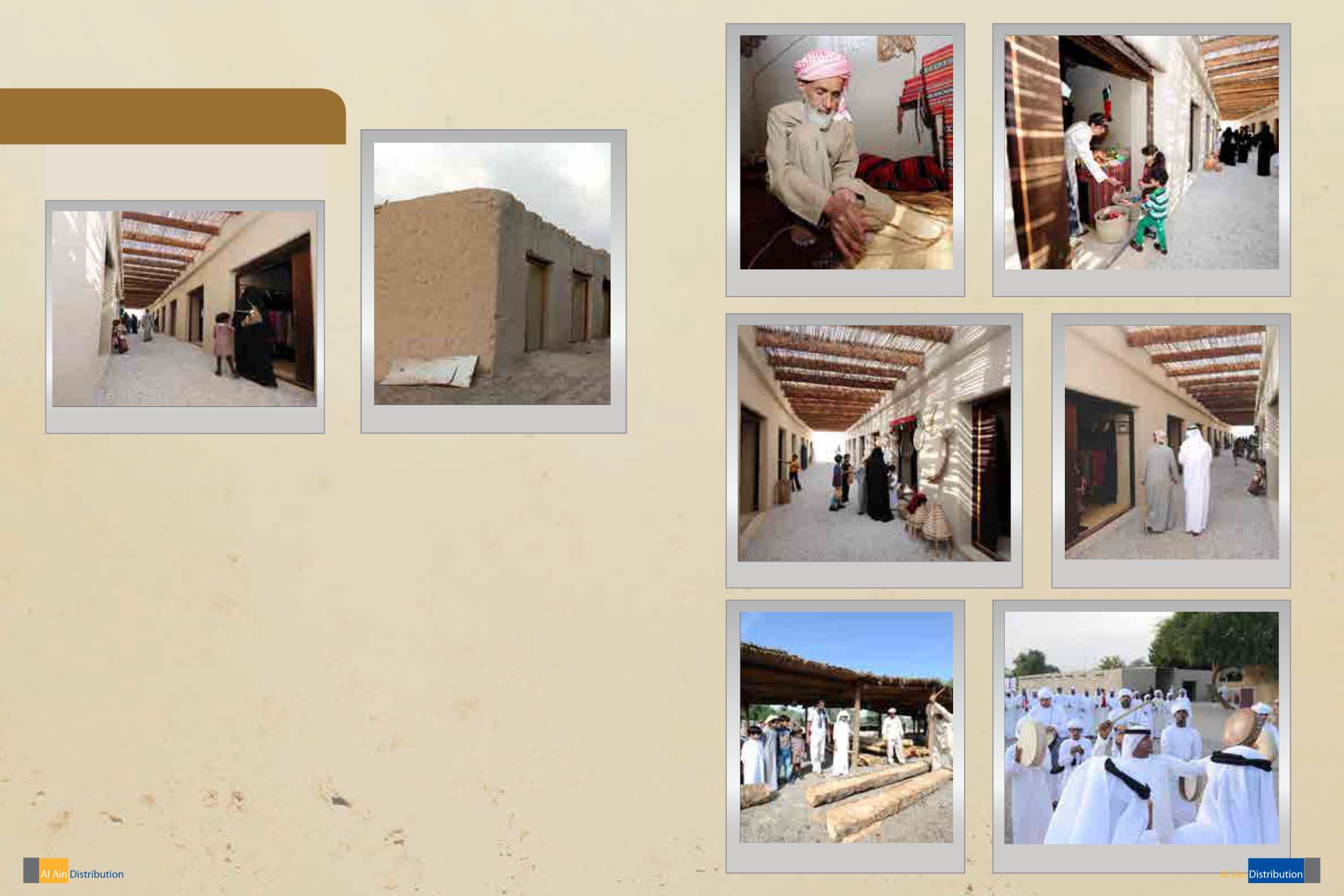
Al Qattara Market includes a variety of
cultural and traditional events, including
traditional handicrafts, Al-Ayala (dance)
Shows, lute playing concert, live
performances of traditional ways of
mud-brickbuildingandmakingroofsout
of palm-fronds, with the participation of
the audience of all ages. This is meant
to enrich public experience of visiting
the market and the Arts Center. It
should be noted that the market initially
encompassed 15 shops, towhich other
4 were later added in the seventies and
granted to merchants for free. These
shops would sell main staple, like
rice, flour, sugar, dates, certain types
of spices and soap, as well as some
household items that would then be
imported from Abu Dhabi and Dubai.
Added to these stuffs, some local
products were offered for sale, knowing
that the market also included shops of
bakers, tailors, and different craftsmen,
like goldsmiths and silversmiths.
The impact of Al Ain City
modernismon themarket
While the market used to open its
doors for the public only from noontime
till the sunset, around ten years later, it
would open its door in twomorning and
evening shifts. Yet, the expansion of the
city and the opening of Al Ain Market
in 1960 affected the commercial traffic
in Al Qattara market due to ease of
transportation to Al Ain market. Hence,
the sales movement gradually declined
until the place was totally abandoned
around 15 years ago, and the market
remained deserted since that period.
Al Qattara Old Market
Page memory, page review of the place in which
areas in the city of Al Ain are talking about memory
place between past and present
67
66
Memory place


